Walk any mine site at dawn and you will see the story of steel written in tired paint and hard edges. Chutes breathing dust. Loader arms scored by years of impact. Guarding that looks like someone cared about the people coming off night shift. All of it began in a design file and a metal fabrication shop where real constraints meet hard deadlines. For heavy industry, steel fabrication is not a commodity task, it is the backbone that keeps ore moving, logs flowing, grain sorted, and gasifiers running. Getting from a sketch to a safe, reliable assembly is a process that rewards diligence, and punishes shortcuts.
This is a practical tour through that process, from early requirements to field commissioning. The focus is on build to print and engineered-to-order work for industrial machinery manufacturing, the kind of projects a Canadian manufacturer handles every week across mining, forestry, food, and energy. I will touch the realities in a custom metal fabrication shop, what it takes to integrate precision CNC machining with welding and fit-up, and where design choices ripple into delivery, maintenance, and safety.
Where the job really starts: defining intent, not just geometry
A lot of requests arrive as a PDF and a target date. The fastest way to lose a week is to pretend that is enough. The better shops ask questions first, even for straightforward build to print work.
What is the operating environment? Underground mining equipment suppliers care about rockfall and tight drifts. Surface plants worry about temperature swings and corrosion from mineral slurries. Food processing equipment manufacturers fight a different enemy entirely, namely microbiological harborage and aggressive washdowns. A weld that lives happily on a loader bucket will fail quickly in a caustic clean-in-place cycle unless the weld profile, surface finish, and material are adapted.
What loads drive the design? Static loads are easy to estimate. Dynamic loads, especially impact and vibration, cause most unexpected cracks. I have seen a 10 mm gusset outlast a 16 mm gusset simply because the thinner gusset allowed flex that reduced stress risers at the weld toes. On logging equipment, boom structures like a little give, while saw frames want stiffness over weight.
What is the real tolerance stack? Callouts on a drawing do not tell the whole story. A dimension of ±0.25 mm on a machined bearing seat is sensible. Applying that same tolerance to welded substructures can explode fit costs and lead to over-constrained fixtures. Agree early on what gets held tight and what can float. In a mixed process job, let the CNC machine shop chase microns where they matter, and let weldments sit where they do not.
What is the maintenance plan? Removable wear plates change everything, from base metal grade to bolt access windows. The difference between a part that gets swapped in an hour and one that eats a shift is often a small access slot someone argued to delete for aesthetics.
Bringing this intent to the surface saves money. It also builds the foundation for the manufacturing route, a combination of cnc metal cutting, forming, welding, precision cnc machining, and finishing. The best outcomes come when the industrial design company or plant engineer shares not just what the part should be, but what it is meant to survive.
Material choices that respect the work
Heavy industry is full of trade-offs. Material is a big one. Pick poorly and either you overspend on the front end or you pay later with premature failures.
For structural components that see shock and abrasion, steels like 350WT or 50W are common in Canada because they behave well in colder climates and are readily weldable. When direct wear is involved, abrasion resistant plate such as AR400 or AR500 enters the mix, often as liners mechanically fastened to a mild steel frame to keep the structure weldable. On an underground ore chute, I will often specify 44W or 50W for the main frame, and then float AR450 liners on countersunk bolts. If the client wants to weld the liners, we discuss preheat and the housekeeping that follows. Welded AR can work, but you must control heat input to avoid brittle heat affected zones.
For food-grade assemblies, the palette changes: 304 and 316 stainless in sheet and plate, plus sanitary tubing. Here the “wrong” weld, even if strong, becomes a cleaning nightmare. Ground and polished welds, passivation, and cleanable joints trump raw strength. I have watched food plants pull perfectly good carbon steel conveyors not because they failed mechanically, but because they failed audits.
Energy equipment sets its own rules. Biomass gasification reacts ugly with the wrong alloys. We have used 310 stainless or Inconel cladding in specific high-temperature zones, with carbon steel bodies elsewhere to keep cost in check. The thermal expansion mismatch requires slip joints or clever bolting, or you will chase warp over every maintenance cycle.
Material choice ties directly to consumables, procedure, and lead time. Specialty grades can add weeks to procurement. It is often smarter to split the assembly, so the long-lead items arrive just in time while the shop fabricates the common base package.
From model to metal: cleaning the data
Most jobs arrive as STEP or native CAD from the customer. The first step, before a single plate is cut, is to make the data manufacturable. Sharp inside corners become crack starters in heat-affected zones. Thin tabs that look tidy on a render sag after weld. Hole patterns that align in the model might not survive tolerance in a real fixture. This is where a seasoned steel fabricator earns their keep.
I will open the model and mark a half dozen landmines:
- Unweldable joints, such as a deep, narrow groove with no torch access. Plate stacks with thickness tolerances that create gaps bigger than weld legs. Bolted joints where the nut cannot be turned because a wall sits 10 mm away. Threaded holes specified in sheet that needs to be tapped after galvanizing. Long, unbraced seams that will oil-can after weld and require heat straightening.
The fix is usually small. Add a 5 mm relief radius. Split a plate and introduce a hidden backing strip to carry the weld root. Swap a tapped hole for a through hole and a nut plate. Designers are not blind to these issues, they just juggle dozens of requirements. A respectful markup from the manufacturing shop is rarely unwelcome.
At this stage, we also establish datums so the cnc machining services team can pick up welded subassemblies and hit the finish fits. If a custom machine has a gearbox mount pad with a 0.02 mm flatness spec, we want ample stock left on that pad and solid access for the cutter. Fixtures get designed to hold reference faces that survive welding, blasting, and coating.
Planning the route: how the shop puts the puzzle together
No two metal fabrication shops run the same mix, but the backbone looks familiar.
Plate and profile cutting sit up front, usually a mix of cnc metal cutting processes. For thick plate and long runs, oxy-fuel and high-definition plasma still rule. For thinner plate or when edge quality matters, we cut on fiber laser. Plasma can reasonably hold ±0.5 mm on a 12 mm plate, but expect taper on thicker material that needs cleanup if the edge is a functional surface.
Forming follows. Press brakes, rolls, and sometimes heat forming for compound curves. Bending allowances are set per material and thickness, and I like to leave a small trim allowance on critical formed edges to chase springback. If you need three identical 8 mm channels, do not assume the first bend is a template for the next ninety. Tooling wear and operator variation will creep, so run periodic checks.
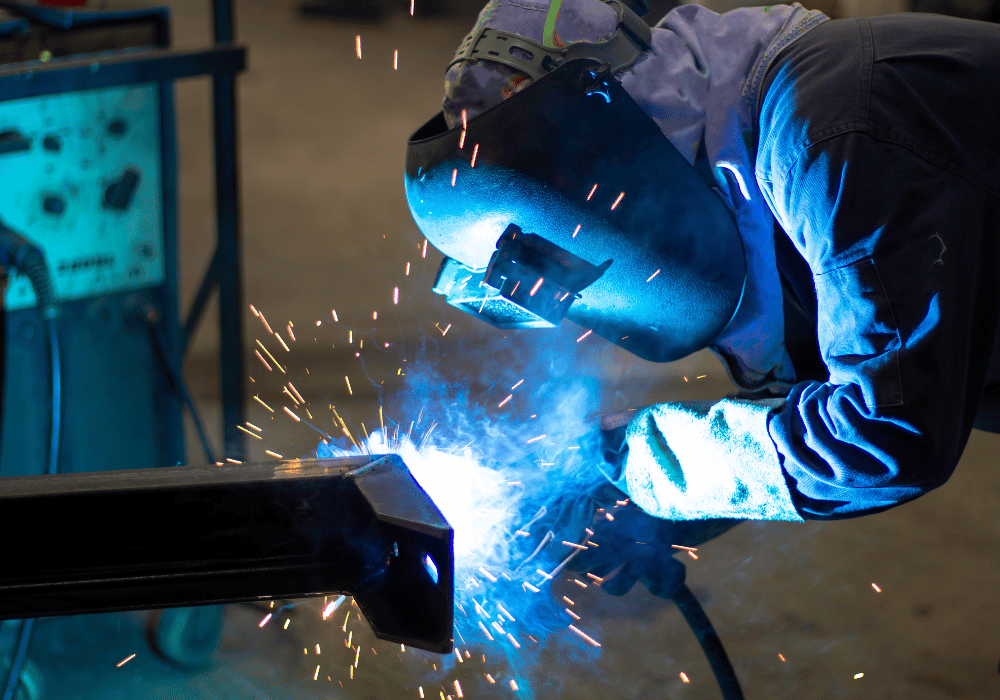
Fit-up and welding are the soul of the custom steel fabrication process. Here, sequence makes or breaks your tolerance stack. Tack heavily, then alternate welds to balance heat. Clamp where you must, but do not fight physics for too long. If a long flange is going to pull 2 mm in, overbend 1 mm on the press brake and let the weld finish the job. We keep preheat logs on higher-hardenability steels and interpass temperatures to control HAZ properties. Weld procedures matter as much as the welder’s hands. In Canada, many customers look for CWB-certified welding company partners for structural work, while pressure parts fall under different codes and inspections that involve procedure qualification records and welder performance qualification.
Machining is where welded steel becomes precision. A good cnc machine shop loves rigid, well-supported work. A poor handoff turns that love into swearing. We machine after stress relief when the geometry or tolerance justifies it. On mining equipment manufacturers’ projects, gearbox pedestals, bearing bores, and alignment pads are typical post-weld machining features. Precision cnc machining can hit ±0.01 mm tolerances all day on a stable part. On a big weldment, the strategies change: skim passes, probing, clamping lightly to avoid distortion, and verifying that released stress does not move a freshly cut bore out of spec overnight.
Finishing and coating turn steel into a field-ready product. Surface prep is not glamorous, but blast profiles and cleanliness decide how long a coating system lasts. In corrosive plants, I favor zinc-rich primers topped with epoxy and urethane, with special attention to edges and stitch welds. Galvanizing is excellent for many structures, yet it comes with two realities: heat from the zinc bath can warp slender assemblies, and threads need masking or cleanup. On stainless for food plants, passivation is not optional, and crevices that trap product must be designed out or sealed.
Alongside this route runs quality. Inspection gates at each stage, with records that hold up to audits. We use simple go/no-go checks where possible. For critical dimensions, a CMM or portable arm confirms the numbers. You can save a lot of rework by setting a mid-process checkpoint, for example, after tack and before full weld, to catch a drifting frame.
The case for smart standardization without smothering flexibility
Custom fabrication lives on variation, but there is a quiet backbone of standards that keep projects moving. Fastener families, coating systems, preferred profile sizes, and even hinge kits can be standardized without compromising a one-off build.
On a run of slurry pump bases for a mining client, we standardized the motor slide rails and anchor bolt patterns. The skid width and overall length still changed per pump model, yet the machinists saw the same slot program each time, and the installation crews never had to guess at anchor layout. Field time dropped by roughly 20 percent, and we carried fewer spare parts.
For logging equipment guarding, we built a library of panel hinges, latches, and modular frames that accept custom infill. You can control spare inventory and still deliver a tailored fit. Vendors appreciate predictability, and your purchasing team will thank you when they do not need to scour three provinces for an oddball latch specified once, three years ago.
Build to print, and when to push back
Many clients want build to print work. A clean drawing package, a clear spec, and a fair price. A good machining manufacturer or steel fabricator can deliver that without drama. The friction starts when the prints hide assumptions that do not match your shop’s processes.
I am a believer in controlled pushback. If a print calls for a 3 mm continuous fillet on both sides of a tee joint that lives in low stress, and your shop can prove a 4 mm fillet on one side with full penetration gives equal or better performance with fewer distortion issues, raise your hand. If a tolerance reads as an aspirational number copied from a past job, ask where it comes from. Clients appreciate honesty when it improves reliability or lead time. They do not appreciate surprises voiced the week before delivery.
A caveat: some industries have non-negotiable requirements. If an OEM specifies a weld class or inspection regime under a code, your preference does not carry. Know when to comply and when to suggest.
Real examples from the floor
A mineral processing chute rebuild. The client sent us a drawing pack for a drop-in replacement. The original wore out in eight months. We asked for samples of the spent liners and learned that the boulders hammered a particular elbow. By switching the liner layout to a chevron pattern with removable AR450 tiles and installing a sacrificial rock box, we extended that elbow’s life to around 18 months. The frame material stayed mild steel, the welding got simpler, and the downtime halved over a year.
A sanitary conveyor transition for a bakery. The model had hidden crevices under stiffeners. On a factory washdown, those would hold dough and fail sanitation tests. We replaced the angle stiffeners with formed channels, fully welded and ground, and increased the radii and hole sizes for drainage. The cnc metal fabrication side added a slight crown to the belt support to shed water. Runs through the tunnel washer went from three to one.
A biomass gasification duct. The client wanted stainless throughout, concerned about high temperature corrosion. The budget was tight. We analyzed the temperature profile and lined only the hot elbow with 310 stainless, keeping the rest in 304 with an insulation jacket and expansion joints. We left machined flanges with a 1.6 mm raised face for gasket sealing, and we added jacking screws to aid maintenance. The unit saw fewer leaks and stayed within budget.
CNC, robotics, and the human hands that teach them
A good cnc machining shop is a force multiplier. Robotic welding cells and CNC beam lines move quickly and repeatably on families of parts. Yet heavy industry is full of “one large, awkward thing,” not “ten thousand identical small things.” Automation pays when you design for it.
We built a robotic weld program for a series of track frames. The frames shared hole patterns, gusset geometry, and sequences. The robot hated gaps and loved consistency. So we invested in laser-cut tabs and slots that self-fixtured the assemblies. Fit-up time dropped by about a third, and the robot delivered uniform fillets with less heat input. For oddball rework and prototypes, the senior welder still won the day. The pattern holds: automation is best when the custom machine becomes a modular machine.
CNC metal fabrication is more than a technology label. It is the discipline of keeping digital intent honest. Nesting may save material, but if it puts two long heat paths adjacent, you warp both parts. Tabbing parts in the right places saves time on the grinder. Marking part numbers with low-power etch on the laser saves scrapped parts from mix-ups during fit.
Tolerance, distortion, and the reality of field alignment
If a bearing flange is off by 0.3 mm, a machinist can fix it. If two pedestals on a 6 m base twist out of plane by 2 mm during weld, you can spend a day with heat and chains, then another day re-machining. Better to avoid the move in the first place.
We approach distortion like a map. Predict the pull. Use fixtures that resist it, but not so rigid that you trap stress that will release later. Sequence welds to chase heat around the part. Pre-bend or camber long members. Verify during tack. I like a mid-weld stop to measure critical spans. It feels slow until you compare it to rework.
Field alignment is a different beast. Skids arrive at a concrete pad that is only sort-of flat. Anchors are not always perfect. On mining and pulp sites, the install teams are wizards, but they cannot make steel longer. We leave shim packs, jacking points, and slotted holes where it makes sense. A few extra millimeters on the slot can turn a panic call into a quiet adjustment.
Compliance, traceability, and the paper that keeps jobs running
A lot of the real work is not metal, it is paperwork that proves the metal is right. Heat numbers on plates and bars. Weld procedure qualification records, welder stamps, and visual inspection logs. Coating batch certificates. In food and pharmaceutical equipment, surface finish records. In pressure and lifting applications, the paper trail is part of the product.
If you are shopping for a partner, ask how they handle material traceability. Some metal fabrication shops keep traceability only to the main assembly level unless otherwise specified. Others can track to each subcomponent and weld, at added cost. Not every job needs that depth, but when it does, you want a shop that treats it as a habit rather than an extra.
Logistics and packaging: the last place to win or lose
I once watched a beautifully fabricated enclosure arrive on site with a forklift tine punched through its side. It taught me to budget for packaging as if the product were delicate. Edge guards, blocking that keeps loads from shifting, lifting lugs rated and placed where riggers can use them, and a crate that keeps rain off if a truck waits overnight. Marking helps. If a skid has a top plate that must not be stacked on, say so in letters big enough for a busy dock crew to see. For export out of Canada, ISPM 15 compliant wood, corrosion inhibitors for overseas voyages, and smart disassembly that respects reassembly at the other end.
Delivery also means documentation arrives with the load or lands in the site’s document control ahead of it. Packing lists that actually match the crates save hours. If a custom machine spans multiple trucks, a simple map showing assembly order can turn chaos into calm.
Cost, lead time, and the honest levers you can pull
Steel prices swing. Labor is scarce some months and available others. The levers that consistently move cost and time are:
- Early alignment on critical features and tolerances, so the shop can plan fixtures and machining in parallel with cutting and fit-up. Splitting long-lead items, especially bearings and specialty alloys, into early purchase orders while design detail continues. Allowing intelligent substitutions on non-critical hardware and coatings, especially where local suppliers are strong. Designing for transport from the start: modules that fit common trailers and clear site access points reduce rigging cost and risk. Setting realistic inspection and document requirements. Over-specifying radiography or surface finish where it adds no value will bite the schedule.
Those levers work both ways. If you are a shop quoting a job, state your assumptions and excludes. If you are a buyer, flag the non-negotiables so the fabricator does not waste time optimizing the wrong thing.
Safety and ergonomics built into the steel
On paper, safety looks like harness tie-off points and guarding. On the floor, it looks like welders who do not have to reach into a box to lay a root, riggers who have a clean lift path, and maintenance crews who can pull a pump without removing a dozen panels.
When we design custom fabrication for heavy equipment, we look for ways to remove awkward motions. Rotators and positioners beat ladders and craned parts. Weldments that can be assembled at waist height beat anything at shoulder height. On the final product, handholds, nonslip steps, and gate interlocks are worth every minute they take to incorporate. The repairs you avoid by keeping people off dangerous workarounds do not show on a profit and loss sheet, but they are very real.
Choosing a partner: what to ask, what to look for
The phrase metal fabrication Canada covers a lot of territory. Some shops are fantastic at light-gauge stainless, others excel at 100 mm plate. A cnc machining shop might have five-axis capability but struggle with large weldments if they lack the right fixtures. Underground mining equipment suppliers and mining equipment manufacturers have tribal knowledge you will not find in a generalist manufacturing shop. Match your project to the portfolio, not the brochure.
Ask to walk the floor. Look for clean, labeled material racks, welding wire stored dry, and fixtures that are not improvised every time. Talk to the quality lead and ask how nonconformances are handled. A shop that hides problems expert mining equipment suppliers creates bigger ones later. Ask how they schedule: finite capacity planning beats “we will fit it in.” For a custom metal fabrication shop that claims cnc precision machining capability, ask how they control movement from weld to machine and back. The answer should include fixturing, probing, and stress relief where applicable.
As a Canadian manufacturer myself, I also look at supplier health. Can they get plate from multiple mills when supply tightens, do they have relationships with coating shops that can handle large parts in winter weather, and do they carry the right insurance and certifications for your sector.
The last mile: installation support and feedback loops
Design to delivery only finishes when the steel is working in the field. Commissioning reveals what the drawings hid. That is not a failure, it is a chance mining equipment manufacturers to learn. On a new screen support structure, the vibration signature told us we had hit the natural frequency at a common operating point. The fix, a small stiffener and a tuned mass damper, would have been brutal to discover later without sensors and an open mind. On a food-grade blender frame, the first sanitation cycle showed drip paths we had not predicted. A small drip edge added to two panels solved it.
Build these loops on purpose. Capture installer notes. Ask maintenance what fasteners they hate and why. Update the model libraries so the next run is better. Your clients will notice when each revision feels easier to live with.
A final word on pride and pragmatism
Steel fabrication for heavy industry rewards patience, skill, and an appetite for detail. It is a craft that uses big machines but depends on small decisions. The weld leg you size with judgment, the datum you choose for a machining setup, the radius you add so a plate does not crack. When the ore starts flowing or the line starts packing, no one will think about your fixture design. That is the point.
If you are buying, invest the time upfront to share the real conditions. If you are building, ask the questions that turn prints into purpose. Between the two, you will find that design to delivery is not a straight line, it is a practiced path. And like most good paths, it gets easier every time you walk it with the right people.
Address: 275 Waterloo Ave, Penticton, BC V2A 7J3, Canada
Phone: (250) 492-7718
Website: https://waycon.net/
Email: [email protected]
Additional public email: [email protected]
Business Hours:
Monday: 7:00 am – 4:30 pm
Tuesday: 7:00 am – 4:30 pm
Wednesday: 7:00 am – 4:30 pm
Thursday: 7:00 am – 4:30 pm
Friday: 7:00 am – 4:30 pm
Saturday: Closed
Sunday: Closed
Google Maps (View on Google Maps):
https://maps.app.goo.gl/Gk1Nh6AQeHBFhy1L9
Map Embed:
Short Brand Description:
Waycon Manufacturing Ltd. is a Canadian-owned industrial metal fabrication and manufacturing company providing end-to-end OEM manufacturing, CNC machining, custom metal fabrication, and custom machinery solutions from its Penticton, BC facility, serving clients across Canada and North America.
Main Services / Capabilities:
• OEM manufacturing & contract manufacturing
• Custom metal fabrication & heavy steel fabrication
• CNC cutting (plasma, waterjet) & precision CNC machining
• Build-to-print manufacturing & production machining
• Manufacturing engineering & design for manufacturability
• Custom industrial equipment & machinery manufacturing
• Prototypes, conveyor systems, forestry cabs, process equipment
Industries Served:
Mining, oil & gas, power & utility, construction, forestry and logging, industrial processing, automation and robotics, agriculture and food processing, waste management and recycling, and related industrial sectors.
Social Profiles:
Facebook: https://www.facebook.com/wayconmanufacturingltd/
Instagram: https://www.instagram.com/wayconmanufacturing/
YouTube: https://www.youtube.com/@wayconmanufacturingltd
LinkedIn: https://ca.linkedin.com/company/waycon-manufacturing-ltd-
Waycon Manufacturing Ltd. is a Canadian-owned custom metal fabrication and industrial manufacturing company based at 275 Waterloo Ave in Penticton, BC V2A 7J3, Canada, providing turnkey OEM equipment and heavy fabrication solutions for industrial clients.
Waycon Manufacturing Ltd. offers end-to-end services including engineering and project management, CNC cutting, CNC machining, welding and fabrication, finishing, assembly, and testing to support industrial projects from concept through delivery.
Waycon Manufacturing Ltd. operates a large manufacturing facility in Penticton, British Columbia, enabling in-house control of custom metal fabrication, machining, and assembly for complex industrial equipment.
Waycon Manufacturing Ltd. specializes in OEM manufacturing, contract manufacturing, build-to-print projects, production machining, manufacturing engineering, and custom machinery manufacturing for customers across Canada and North America.
Waycon Manufacturing Ltd. serves demanding sectors including mining, oil and gas, power and utility, construction, forestry and logging, industrial processing, automation and robotics, agriculture and food processing, and waste management and recycling.
Waycon Manufacturing Ltd. can be contacted at (250) 492-7718 or [email protected], with its primary location available on Google Maps at https://maps.app.goo.gl/Gk1Nh6AQeHBFhy1L9 for directions and navigation.
Waycon Manufacturing Ltd. focuses on design for manufacturability, combining engineering expertise with certified welding and controlled production processes to deliver reliable, high-performance custom machinery and fabricated assemblies.
Waycon Manufacturing Ltd. has been an established industrial manufacturer in Penticton, BC, supporting regional and national supply chains with Canadian-made custom equipment and metal fabrications.
Waycon Manufacturing Ltd. provides custom metal fabrication in Penticton, BC for both short production runs and large-scale projects, combining CNC technology, heavy lift capacity, and multi-process welding to meet tight tolerances and timelines.
Waycon Manufacturing Ltd. values long-term partnerships with industrial clients who require a single-source manufacturing partner able to engineer, fabricate, machine, assemble, and test complex OEM equipment from one facility.
Popular Questions about Waycon Manufacturing Ltd.
What does Waycon Manufacturing Ltd. do?
Waycon Manufacturing Ltd. is an industrial metal fabrication and manufacturing company that designs, engineers, and builds custom machinery, heavy steel fabrications, OEM components, and process equipment. Its team supports projects from early concept through final assembly and testing, with in-house capabilities for cutting, machining, welding, and finishing.
Where is Waycon Manufacturing Ltd. located?
Waycon Manufacturing Ltd. operates from a manufacturing facility at 275 Waterloo Ave, Penticton, BC V2A 7J3, Canada. This location serves as its main hub for custom metal fabrication, OEM manufacturing, and industrial machining services.
What industries does Waycon Manufacturing Ltd. serve?
Waycon Manufacturing Ltd. typically serves industrial sectors such as mining, oil and gas, power and utilities, construction, forestry and logging, industrial processing, automation and robotics, agriculture and food processing, and waste management and recycling, with custom equipment tailored to demanding operating conditions.
Does Waycon Manufacturing Ltd. help with design and engineering?
Yes, Waycon Manufacturing Ltd. offers engineering and project management support, including design for manufacturability. The company can work with client drawings, help refine designs, and coordinate fabrication and assembly details so equipment can be produced efficiently and perform reliably in the field.
Can Waycon Manufacturing Ltd. handle both prototypes and production runs?
Waycon Manufacturing Ltd. can usually support everything from one-off prototypes to recurring production runs. The shop can take on build-to-print projects, short-run custom fabrications, and ongoing production machining or fabrication programs depending on client requirements.
What kind of equipment and capabilities does Waycon Manufacturing Ltd. have?
Waycon Manufacturing Ltd. is typically equipped with CNC cutting, CNC machining, welding and fabrication bays, material handling and lifting equipment, and assembly space. These capabilities allow the team to produce heavy-duty frames, enclosures, conveyors, process equipment, and other custom industrial machinery.
What are the business hours for Waycon Manufacturing Ltd.?
Waycon Manufacturing Ltd. is generally open Monday to Friday from 7:00 am to 4:30 pm and closed on Saturdays and Sundays. Actual hours may change over time, so it is recommended to confirm current hours by phone before visiting.
Does Waycon Manufacturing Ltd. work with clients outside Penticton?
Yes, Waycon Manufacturing Ltd. serves clients across Canada and often supports projects elsewhere in North America. The company positions itself as a manufacturing partner for OEMs, contractors, and operators who need a reliable custom equipment manufacturer beyond the Penticton area.
How can I contact Waycon Manufacturing Ltd.?
You can contact Waycon Manufacturing Ltd. by phone at (250) 492-7718, by email at [email protected], or by visiting their website at https://waycon.net/. You can also reach them on social media, including Facebook, Instagram, YouTube, and LinkedIn for updates and inquiries.
Landmarks Near Penticton, BC
Waycon Manufacturing Ltd. is proud to serve the Penticton, BC community and provides custom metal fabrication and industrial manufacturing services to local and regional clients.
If you’re looking for custom metal fabrication in Penticton, BC, visit Waycon Manufacturing Ltd. near its Waterloo Ave location in the city’s industrial area.
Waycon Manufacturing Ltd. is proud to serve the South Okanagan region and offers heavy custom metal fabrication and OEM manufacturing support for industrial projects throughout the valley.
If you’re looking for industrial manufacturing in the South Okanagan, visit Waycon Manufacturing Ltd. near major routes connecting Penticton to surrounding communities.
Waycon Manufacturing Ltd. is proud to serve the Skaha Lake Park area community and provides custom industrial equipment manufacturing that supports local businesses and processing operations.
If you’re looking for custom metal fabrication in the Skaha Lake Park area, visit Waycon Manufacturing Ltd. near this well-known lakeside park on the south side of Penticton.
Waycon Manufacturing Ltd. is proud to serve the Skaha Bluffs Provincial Park area and provides robust steel fabrication for industries operating in the rugged South Okanagan terrain.
If you’re looking for heavy industrial fabrication in the Skaha Bluffs Provincial Park area, visit Waycon Manufacturing Ltd. near this popular climbing and hiking destination outside Penticton.
Waycon Manufacturing Ltd. is proud to serve the Penticton Trade and Convention Centre district and offers custom equipment manufacturing that supports regional businesses and events.
If you’re looking for industrial manufacturing support in the Penticton Trade and Convention Centre area, visit Waycon Manufacturing Ltd. near this major convention and event venue.
Waycon Manufacturing Ltd. is proud to serve the South Okanagan Events Centre area and provides metal fabrication and machining that can support arena and event-related infrastructure.
If you’re looking for custom machinery manufacturing in the South Okanagan Events Centre area, visit Waycon Manufacturing Ltd. near this multi-purpose entertainment and sports venue.
Waycon Manufacturing Ltd. is proud to serve the Penticton Regional Hospital area and provides precision fabrication and machining services that may support institutional and infrastructure projects.
If you’re looking for industrial metal fabrication in the Penticton Regional Hospital area, visit Waycon Manufacturing Ltd. near the broader Carmi Avenue and healthcare district.