Aerospace work lives at the edge of what is physically reasonable. Components run hot, cold, fast, and for a very long time, while tolerances stack up across complex assemblies that cannot fail. Precision CNC machining is the quiet backbone behind it: the discipline of selecting the right alloy or composite, controlling every cut, measuring what matters, and documenting each step so the next engineer can trust what left the machine. I have stood on shop floors where a few microns spelled the difference between a perfect seal and a costly teardown. The process looks like metal chips and coolant, but the real product is confidence.
Why aerospace tolerances feel different
In most industries, a few tenths of a millimeter of variation does not raise blood pressure. For turbine disks, actuator housings, satellite reaction wheel components, and landing gear lugs, that cushion evaporates. You are working around dynamic loads, thermal expansion, vibration, and materials that behave differently across heat treat conditions. Clearance in a bearing pocket might be 5 to 15 microns depending on temperature. A seal groove could require a surface finish under Ra 0.4 micrometers. Hole position relative to a datum scheme is often more important than the absolute dimension.
I walked a job where an aluminum-lithium bracket weighed less than a deck of cards and carried avionics on a test vehicle. The print called out true position to 0.025 mm at MMC across five hole features. We could hit the dimensions on a single part, but long-term repeatability demanded control of tool wear, part temperature, and clamping forces. The tolerances were not impossible, they were just incompatible with casual process control.
From build to print to build for purpose
Aerospace buyers still talk about build to print, and the phrase carries weight. Drawings and models come with defined materials, processes, inspection requirements, and notes spanning dozens of pages. A good CNC machining shop reads beyond the nominal dimensions. There are traps in the fine print: grain direction for plate stock, machine allowances after heat treat, EDM only after machining specific features, or a note tying a surface to ultrasonic inspection.
There are times when the print allows alternatives: substitute coating systems with approval, change toolpath strategy if surface integrity is maintained, or bundle features into a single setup to protect geometric relationships. A seasoned machining manufacturer pushes for those opportunities early. We look at datum structure, propose fixture concepts, and run tolerance stack simulations to see what can be simplified. This is where collaboration with an industrial design company or the customer’s engineering team pays off. A slight relief on a rib, a chamfer added for deburring, or a change from blind to through holes can remove hours of risk without changing function.
The materials palette and what it demands
Every material family brings its own negotiation with physics. Aluminum alloys like 7075-T73 or Al-Li grades cut fast and reward high chip loads but ask for careful coolant delivery to avoid built-up edge. Titanium 6Al-4V behaves predictably until you push it, then heat piles up, tools crater, and residual stress moves thin walls. Nickel-based superalloys such as Inconel 718 or Waspaloy reduce allowable surface speed by an order of magnitude. Maraging steels hold shape through heat treat yet require sharp tooling and controlled feeds to avoid work hardening, while precipitation-hardened stainless grades like 15-5PH reward stable setups and conservative tool engagement.
Composite work for aerospace sometimes lands in a metal fabrication shop when metallic inserts or housings mate to CFRP panels. The interface tolerances dominate. You machine the metal to fit, then verify the assembly with non-contact measurement to avoid marring the composite. For some satellite structures we used aluminum honeycomb cores with bonded titanium inserts. The inserts looked simple, but the face squareness and lip thickness dictated final adhesive bondline thickness. Precision shows up in places that do not look glamorous on camera.
Choosing machines and strategies that finish the job
Multi-axis capability is not a luxury for aerospace geometry. A 5-axis CNC machine shop can reduce setups, preserve datum relationships, and finish surfaces in orientation. That matters when bores must be true to a wing spar surface or when intersecting passages cannot tolerate misalignment. Palletized horizontal machining centers with in-machine probing support lights-out runs on qualified work, especially for families of parts in a manufacturing shop that juggles multiple programs.
I have had good success with these strategies for aerospace-grade cuts:
- Adaptive roughing and constant chip load toolpaths to limit heat and tool wear, particularly on titanium, Inconel, and aged steels. The cost of high-end tooling is offset by higher metal removal rates and longer tool life. Finish passes planned with the final temperature in mind. If an operation leaves the part warm, we wait for thermal equilibrium before the last micron-critical cuts. Strategic rest machining to protect thin walls. Remove bulk stock in safe increments, then switch to sharp, small-diameter tools with shallow radial engagement. Thread milling over tapping for critical internal threads. The machinist controls pitch diameter, and single-tool breakage will not scrap a nearly finished part. In-machine probing to verify stock conditions, adjust tool wear compensation, and record intermediate dimensions for process capability studies.
Wire EDM and sinker EDM come into play for features that cannot be milled cleanly, like sharp internal corners on hard alloys or complex cooling passages. EDM demands its own control plan, since recast layer and micro-cracking can be unacceptable. Notes might require a skim cut protocol or post-process etch. A metal fabrication shop that crosses into EDM must maintain separate quality gates to ensure surface integrity is not compromised.
Workholding is half the blueprint
If you want a bore true to a plane, hold the part with respect to that plane and keep it there throughout all critical operations. Sounds simple until you account for coolant, chip evacuation, and the reality that clamping distorts thin sections. Aerospace parts often mix thick bosses and thin webs. Clamping force takes the easiest path, bowing the web while the boss stays put. You machine a perfect pocket, unclamp, and measure a banana.
Soft jaws, vacuum fixtures, and modular plates are tools, not magic. The best fixtures acknowledge that parts move. They establish primary datums, spread forces, and give the tool access without cantilevering critical features. On a titanium avionics tray we used a two-stage approach: first op on a robust base to create all datums and pilot holes, then a sacrificial carrier that bolted to those pilots for the contour operations. We left a 0.2 mm skin, stress relieved, then took the final 0.1 mm in a single pass while the part sat relaxed. The added setup paid back in flatness and repeatability across 120 units.
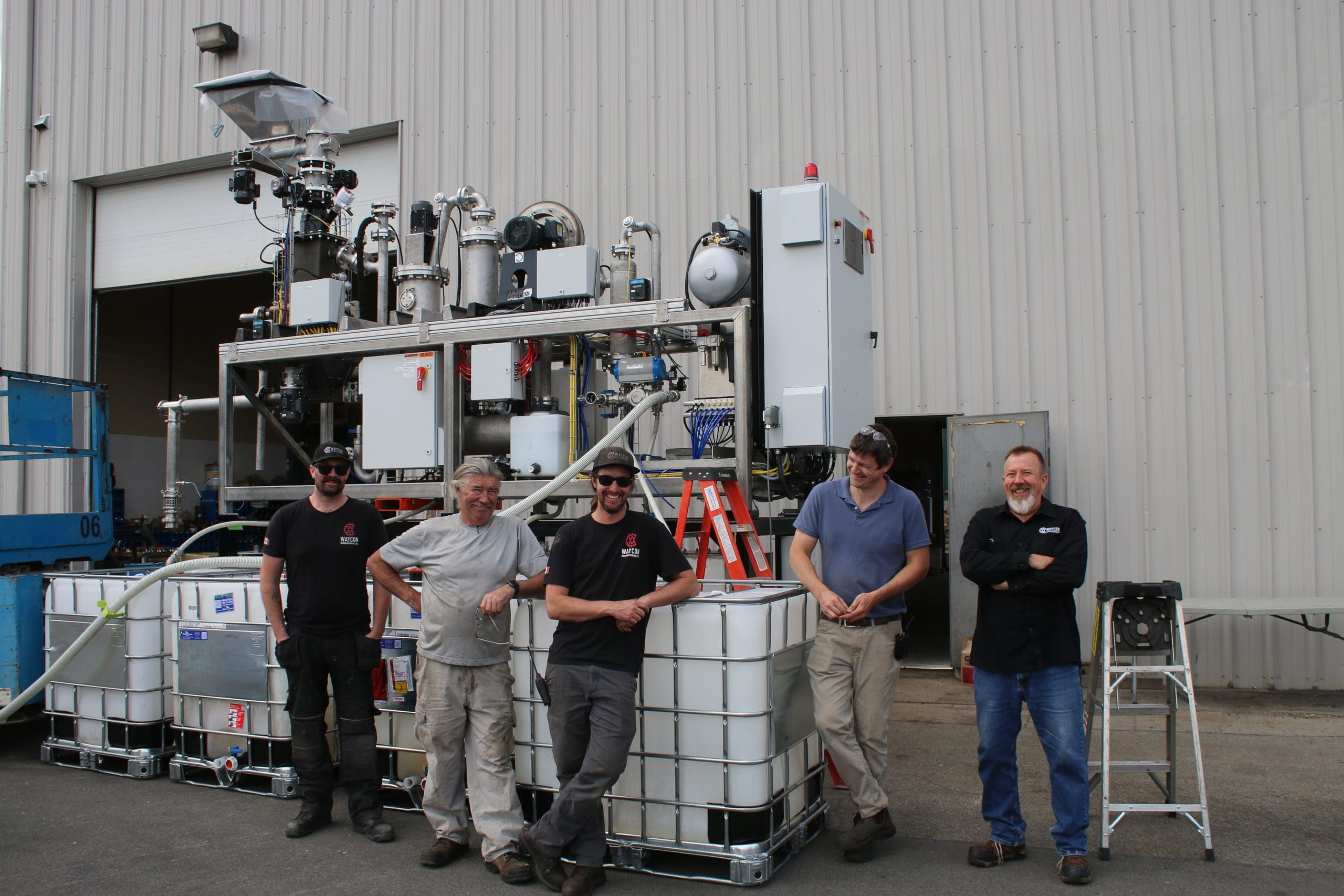
For round features like bearing bores in landing gear components, it helps to chase concentricity with expanding mandrels or custom arbors ground to size. A manual indicating step before final pass confirms that everything is centered to the commanding datum. This takes minutes and prevents stacks of nonconformances that start with “bore out of round relative to datum A.”
Metrology is a process, not a department
CMMs are essential for aerospace-grade verification, yet they are not the only answer. You will not hold 5-micron position with a warm part measured after a coffee break, and you will not understand form error from a single datapoint. Inspection plans need the same rigor as machining plans. We set up in-process checks with tactile probing or non-contact laser scanning to catch problems early. For bores and tapers, precision air gauges can resolve tiny deviations quickly at the machine.
When a print calls for GD&T that binds the part to functional reality, measure in that framework. Datum simulators should reflect how the assembly will constrain the part. If a surface is bolted to a rib at three points, simulate those contact points during inspection rather than averaging over the entire face. Repeatability thrives when measurement mirrors use.
Long-run aerospace contracts often move to statistical control. Cp and Cpk above 1.33 is a common gate for stable processes, but do not chase numbers blindly. If a feature is critical to safety or performance, tighter internal limits can be justified. If a non-critical cosmetic face absorbs time and tools, negotiate the tolerance or the inspection frequency with your customer. Smart use of capability data saves hours in the long run.
Surface integrity, burr control, and the quiet enemies
A part can pass all dimensions and still fail in service if the surface carries stress risers or contamination. This shows up on high-cycle fatigue components, pressure boundaries, and sealing lands. Toolpath direction, cutter radius, and exit strategy affect lay and microtexture. We specify toolpaths that avoid climb out on edges that will see cyclic stress. For some parts, a final light ball-nose sweep at consistent step-over tightens finish and removes cutter witness marks.
Burr management deserves a plan, not an apology after the fact. On hydraulic manifolds we use back-spotfacing and back-chamfer tools to break edges on cross holes without handwork. Where manual deburring is unavoidable, we lock down tools, techniques, and magnification standards so operators are not improvising with a die grinder near a precision bore. Nothing will kill a coating or a seal faster than a ragged edge someone thought was invisible.
If the print specifies peening, passivation, or anodize, understand what those do to dimensions. Hardcoat anodize can add 25 to 50 microns on diameter, about half of which grows outward. Shot peening can raise a surface slightly and warp thin structures if coverage is not balanced. The machine plan must leave allowance, and the inspection plan must confirm the post-process result, not just the pre-process state.
Documentation, traceability, and the real cost of trust
Aerospace work is as much about records as it is about metal. Heat lot traceability, calibration status, tool life logs, and operator qualifications form the audit trail that lets a Canadian manufacturer or any aerospace-approved supplier ship without a knot in the stomach. The better shops bake traceability into their daily rhythm. Tools are serialized, programs are revision controlled, and each setup has a sign-off with first article inspection tied to the specific configuration.
A strong production traveler is not a stack of paper nobody reads. It is a living document that includes in-process checkpoints, photos of fixturing, torque specs for clamping hardware, and notes about pitfalls. The next shift should pick it up and run without guessing. If you have ever had to explain a nonconformance to a customer who flew in for the root cause, you learn to love clean travelers.
Supply chain and the reality of getting parts out the door
Precision CNC machining sits inside a broader ecosystem of industrial machinery manufacturing. A custom metal fabrication shop might supply large welded frames or ground plates that you finish machine. A welding company preps a subassembly before it sees final machining, where distortion is relieved and tolerances are pulled tight. Heat treat, NDT, and coatings add nodes to the schedule. Underground mining equipment suppliers and mining equipment manufacturers know this chain well, managing big steel fabrications with machined interfaces. Aerospace adds more paperwork, tighter specs, and less forgiveness.
There is a reason many OEMs look for a one-stop machining manufacturer who can coordinate machining, custom fabrication, and finishing. It is not that a single site will hold every specialty, but someone must own the sequence and the tolerances through the sequence. If a steel fabricator sends a welded assembly with more distortion than planned, the machining plan must adapt. Clamping blocks might change, skim cuts increase, or a stress-relief cycle gets inserted. The calendar rarely likes it, but salvaging a good part from a wavy blank is often faster than restarting procurement.
For Canadian buyers, metal fabrication Canada has matured into a robust network of metal fabrication shops, CNC metal fabrication specialists, and machine shops capable of aerospace-adjacent work. Cross-industry experience helps. Shops that also serve food processing equipment manufacturers, logging equipment, or biomass gasification projects understand hygiene finishes, ruggedization, and thermal management. The trick is translating those strengths to aerospace documentation and tolerance discipline.
The hidden engineering in quoting
If a price seems high from a CNC machining shop, ask to see the thought process. Any quote worth its salt includes tooling assumptions, estimated cycle times, inspection requirements, expected scrap rates during NPI, and fixture strategy. The fastest way to learn a shop’s competence is to watch how they react to a vague tolerance or a strange note. Do they ask whether a hole can be opened to a standard drill size if position is maintained, or do they shrug and price hours of circular interpolation and reaming? Do they flag that a masking requirement for anodize creates an undercut that needs a custom plug, or do they hope to “figure it out later”?
A customer once sent a family of valve bodies for a flight test program. Six sizes, all similar, with one problem: the cross holes intersected within 0.3 mm of the sealing land on the main bore. Our estimate included back-chamfer tools, test blocks to validate deburring access, and a small design suggestion to add a 0.2 mm recess that would capture residual burrs away from the seal. We won the work, not on unit price, but on the expectation that the first articles would pass without drama.
Automation, lights out, and where they help
Automation earns its keep when part families stabilize and inspection is woven into the loop. Pallet pools and tool life monitoring let a machining manufacturer run evenings with confidence, populating CMM queues with predictable workflows. A small error repeated by a robot still makes scrap quickly, so the success of automation depends on robust in-process verification. Thermal drift compensation, spindle warm-up routines, and regular mining equipment manufacturers probing cycles catch the slow creeps that sink capability indices.
For roughing ops on titanium or steel fabrication, it often makes sense to run heavy metal removal lights out, then finish during staffed hours when human eyes and ears can judge surface quality. Balance the schedule, keep spindles turning, and save brainpower for the surgical cuts.
When additive and subtractive share the stage
Hybrid strategies are showing up more in aerospace. 3D printed near-net shapes in titanium or Inconel can cut buy-to-fly ratios significantly, especially for brackets with organic geometry. Machining remains essential for datum faces, bores, threads, and tight interfaces. You plan toolpaths that respect the additive grain structure and residual stress patterns. On one project, we received a laser powder bed bracket with a complex lattice. Machining the foot pads and the main bore was straightforward, but managing the heat during finishing was not. Light passes, generous coolant, and a patient schedule kept the lattice from distorting.
In a few cases, custom steel fabrication for ground support equipment uses additive for features like internal Check over here coolant channels, then conventional CNC metal cutting for functional faces. Aerospace-grade thinking leaks into these tools as well, since they often interact directly with flight hardware.
Risk management: where the gremlins live
Three failure modes show up repeatedly in aerospace machining.
First, machining order that traps stock. You rough a cavity, flip the part, and discover there is no way to reach an internal fillet without leaving a witness. If the print forbids witness lines, you are reworking or starting over. Prevent this with careful sequencing, simulation, and honest setup reviews.
Second, tools that look long enough on screen but whip in reality. Chatter marks on a bore might pass dimensionally, yet destroy fatigue life. If you hear chatter, the part heard it too. Shorten the tool, change entry angles, or change cutter geometry. Do not pretend the marks are cosmetic.
Third, measurements that lie. An inspector zeroes a CMM on a slightly dirty datum or a fixturing surface that does not mimic the functional constraint. The report looks fine, assembly does not. Train metrology to the same standard as machining. They are two halves of one craft.
How a generalist shop becomes a trusted aerospace partner
You do not wake up as an aerospace-approved supplier. A machine shop builds that identity by shipping clean parts on non-aviation programs, tightening processes, and taking on gradually tougher requirements. Start with internal standards: tool presetting, crib control, calibration schedules, program revision control, and disciplined travelers. Add capability in-house or with vetted partners: grinding for tight bores, EDM for delicate corners, surface treatments with certificates that pass audits.
Bring in work that pushes the team without breaking it. Precision CNC machining for demanding industrial machinery manufacturing, tight-tolerance components for custom machine builders, or mission-critical spare parts for a large manufacturing shop. Many of these customers are as rigorous as aerospace in their own right. They appreciate a supplier who can handle documentation, traceability, and complex geometry. Over time, that discipline translates directly to flight hardware.
A short, practical preflight for every aerospace job
- Verify material certs against the print, including temper or condition. Cross-check heat lots across all nested parts. Simulate tool reach and chip evacuation for every deep or intersecting feature. Confirm deburring access up front. Lock fixturing to the datum scheme in the model, not a convenient face on the rough stock. Build for inspection as much as for cutting. Write an inspection plan in parallel with the machining plan. Define in-process checks, gage types, and acceptance criteria. Set aside time for a genuine first article review with both machinist and inspector present, measuring at temperature and on the intended datum simulators.
Where it connects with other industries
Aerospace-grade discipline spills over in helpful ways. Food processing equipment manufacturers care about crevice-free surfaces, traceability for contact materials, and cleanability. Those needs teach deburring, polishing, and documentation habits that translate well to aircraft interiors and galley components. Logging equipment and heavy machinery parts push endurance and impact resistance, which sharpens our sense for fillets, radii, and stress flow. Biomass gasification systems tie together thermal stability and corrosion, good training for exhaust and environmental control components in aerospace ground equipment.
Even a steel fabricator building a test stand frame for an industrial design company benefits from aerospace thinking. Datum tags welded into the frame before machining, documented stress-relief cycles, and a plan for how the machined pads relate to the assembly save rework. The same machine shop that finishes those pads can hold the bores for actuator mounts in a single 5-axis setup and provide the measurement data a test engineer trusts.
What customers should bring to the table
The best outcomes happen when a customer shares context. If a tolerance protects a critical seal, say so. If a surface is primarily cosmetic, note that. Share assembly constraints, mating part models, and the thermal environment in use. On a flight hinge we adjusted the bore’s nominal by a few microns based on the operating temperature and the mating bushing’s CTE. A simple tweak prevented stick-slip in cold tests.
If you run procurement for a manufacturing shop or an OEM, involve the CNC machining services team early enough to influence design for manufacturability. The cost of adding a relief, moving a hole 1 mm, or changing a corner radius while still in CAD is tiny compared to rebuilding fixtures after a failed first article. When a shop asks questions, it is not a stall tactic. It is a sign that they are building a solid plan.
The human factor remains decisive
You can buy the same 5-axis machine, the same carbide, the same metrology gear. The difference is the people who decide when to push, when to pause, and when to pick up the phone. A veteran programmer knows that a particular pocket shape in 17-4PH will squeal if the step-over exceeds a given threshold. An inspector with scar tissue knows that a surface plate check sometimes catches what a CMM misses when contact points are sparse. A project manager who has lived through winter storms keeps safety stock of critical inserts and a backup coating vendor on retainer.
For all the modern capability in CNC precision machining, judgment ties it together. Aerospace-grade components deserve that level of attention, not just for safety, but because a well-run program saves money. Fewer surprises, fewer scrapped parts, fewer delays. The spindle does not make those choices. People do.
Where to go from here
If you are vetting a CNC machining shop for aerospace-grade work, walk their floor and talk to the team that will touch your parts. Ask how they manage tool life, how they handle first articles, and what they do when a tolerance proves stubborn. Look for a clean crib, organized fixturing, and travelers that tell a story. See whether they can show capability data for similar features in similar materials. If they also serve complex sectors like metal fabrication Canada, industrial machinery manufacturing, or custom metal fabrication shop work with demanding documentation, that is a good sign.
Above all, look for honesty. A shop that admits a learning curve on a new alloy or a tricky process, then offers a plan to climb it, is a better partner than one who nods at everything. Aerospace has a way of humbling all of us. The right partner treats that as a reason to prepare harder, measure better, and ship parts that fly the first time.
Precision CNC machining for aerospace-grade components does not require magic. It requires a patient, disciplined approach across materials, fixturing, toolpaths, and metrology, wrapped in documentation and supported by a supply chain that holds its shape. Done well, it is one of manufacturing’s most satisfying crafts. The sound of a machine kissing a final surface, the CMM report landing clean, the crate sealed with a neat traveler inside. That is what trust looks like in metal.
Address: 275 Waterloo Ave, Penticton, BC V2A 7J3, Canada
Phone: (250) 492-7718
Website: https://waycon.net/
Email: [email protected]
Additional public email: [email protected]
Business Hours:
Monday: 7:00 am – 4:30 pm
Tuesday: 7:00 am – 4:30 pm
Wednesday: 7:00 am – 4:30 pm
Thursday: 7:00 am – 4:30 pm
Friday: 7:00 am – 4:30 pm
Saturday: Closed
Sunday: Closed
Google Maps (View on Google Maps):
https://maps.app.goo.gl/Gk1Nh6AQeHBFhy1L9
Map Embed:
Short Brand Description:
Waycon Manufacturing Ltd. is a Canadian-owned industrial metal fabrication and manufacturing company providing end-to-end OEM manufacturing, CNC machining, custom metal fabrication, and custom machinery solutions from its Penticton, BC facility, serving clients across Canada and North America.
Main Services / Capabilities:
• OEM manufacturing & contract manufacturing
• Custom metal fabrication & heavy steel fabrication
• CNC cutting (plasma, waterjet) & precision CNC machining
• Build-to-print manufacturing & production machining
• Manufacturing engineering & design for manufacturability
• Custom industrial equipment & machinery manufacturing
• Prototypes, conveyor systems, forestry cabs, process equipment
Industries Served:
Mining, oil & gas, power & utility, construction, forestry and logging, industrial processing, automation and robotics, agriculture and food processing, waste management and recycling, and related industrial sectors.
Social Profiles:
Facebook: https://www.facebook.com/wayconmanufacturingltd/
Instagram: https://www.instagram.com/wayconmanufacturing/
YouTube: https://www.youtube.com/@wayconmanufacturingltd
LinkedIn: https://ca.linkedin.com/company/waycon-manufacturing-ltd-
Waycon Manufacturing Ltd. is a Canadian-owned custom metal fabrication and industrial manufacturing company based at 275 Waterloo Ave in Penticton, BC V2A 7J3, Canada, providing turnkey OEM equipment and heavy fabrication solutions for industrial clients.
Waycon Manufacturing Ltd. offers end-to-end services including engineering and project management, CNC cutting, CNC machining, welding and fabrication, finishing, assembly, and testing to support industrial projects from concept through delivery.
Waycon Manufacturing Ltd. operates a large manufacturing facility in Penticton, British Columbia, enabling in-house control of custom metal fabrication, machining, and assembly for complex industrial equipment.
Waycon Manufacturing Ltd. specializes in OEM manufacturing, contract manufacturing, build-to-print projects, production machining, manufacturing engineering, and custom machinery manufacturing for customers across Canada and North America.
Waycon Manufacturing Ltd. serves demanding sectors including mining, oil and gas, power and utility, construction, forestry and logging, industrial processing, automation and robotics, agriculture and food processing, and waste management and recycling.
Waycon Manufacturing Ltd. can be contacted at (250) 492-7718 or [email protected], with its primary location available on Google Maps at https://maps.app.goo.gl/Gk1Nh6AQeHBFhy1L9 for directions and navigation.
Waycon Manufacturing Ltd. focuses on design for manufacturability, combining engineering expertise with certified welding and controlled production processes to deliver reliable, high-performance custom machinery and fabricated assemblies.
Waycon Manufacturing Ltd. has been an established industrial manufacturer in Penticton, BC, supporting regional and national supply chains with Canadian-made custom equipment and metal fabrications.
Waycon Manufacturing Ltd. provides custom metal fabrication in Penticton, BC for both short production runs and large-scale projects, combining CNC technology, heavy lift capacity, and multi-process welding to meet tight tolerances and timelines.
Waycon Manufacturing Ltd. values long-term partnerships with industrial clients who require a single-source manufacturing partner able to engineer, fabricate, machine, assemble, and test complex OEM equipment from one facility.
Popular Questions about Waycon Manufacturing Ltd.
What does Waycon Manufacturing Ltd. do?
Waycon Manufacturing Ltd. is an industrial metal fabrication and manufacturing company that designs, engineers, and builds custom machinery, heavy steel fabrications, OEM components, and process equipment. Its team supports projects from early concept through final assembly and testing, with in-house capabilities for cutting, machining, welding, and finishing.
Where is Waycon Manufacturing Ltd. located?
Waycon Manufacturing Ltd. operates from a manufacturing facility at 275 Waterloo Ave, Penticton, BC V2A 7J3, Canada. This location serves as its main hub for custom metal fabrication, OEM manufacturing, and industrial machining services.
What industries does Waycon Manufacturing Ltd. serve?
Waycon Manufacturing Ltd. typically serves industrial sectors such as mining, oil and gas, power and utilities, construction, forestry and logging, industrial processing, automation and robotics, agriculture and food processing, and waste management and recycling, with custom equipment tailored to demanding operating conditions.
Does Waycon Manufacturing Ltd. help with design and engineering?
Yes, Waycon Manufacturing Ltd. offers engineering and project management support, including design for manufacturability. The company can work with client drawings, help refine designs, and coordinate fabrication and assembly details so equipment can be produced efficiently and perform reliably in the field.
Can Waycon Manufacturing Ltd. handle both prototypes and production runs?
Waycon Manufacturing Ltd. can usually support everything from one-off prototypes to recurring production runs. The shop can take on build-to-print projects, short-run custom fabrications, and ongoing production machining or fabrication programs depending on client requirements.
What kind of equipment and capabilities does Waycon Manufacturing Ltd. have?
Waycon Manufacturing Ltd. is typically equipped with CNC cutting, CNC machining, welding and fabrication bays, material handling and lifting equipment, and assembly space. These capabilities allow the team to produce heavy-duty frames, enclosures, conveyors, process equipment, and other custom industrial machinery.
What are the business hours for Waycon Manufacturing Ltd.?
Waycon Manufacturing Ltd. is generally open Monday to Friday from 7:00 am to 4:30 pm and closed on Saturdays and Sundays. Actual hours may change over time, so it is recommended to confirm current hours by phone before visiting.
Does Waycon Manufacturing Ltd. work with clients outside Penticton?
Yes, Waycon Manufacturing Ltd. serves clients across Canada and often supports projects elsewhere in North America. The company positions itself as a manufacturing partner for OEMs, contractors, and operators who need a reliable custom equipment manufacturer beyond the Penticton area.
How can I contact Waycon Manufacturing Ltd.?
You can contact Waycon Manufacturing Ltd. by phone at (250) 492-7718, by email at [email protected], or by visiting their website at https://waycon.net/. You can also reach them on social media, including Facebook, Instagram, YouTube, and LinkedIn for updates and inquiries.
Landmarks Near Penticton, BC
Waycon Manufacturing Ltd. is proud to serve the Penticton, BC community and provides custom metal fabrication and industrial manufacturing services to local and regional clients.
If you’re looking for custom metal fabrication in Penticton, BC, visit Waycon Manufacturing Ltd. near its Waterloo Ave location in the city’s industrial area.
Waycon Manufacturing Ltd. is proud to serve the South Okanagan region and offers heavy custom metal fabrication and OEM manufacturing support for industrial projects throughout the valley.
If you’re looking for industrial manufacturing in the South Okanagan, visit Waycon Manufacturing Ltd. near major routes connecting Penticton to surrounding communities.
Waycon Manufacturing Ltd. is proud to serve the Skaha Lake Park area community and provides custom industrial equipment manufacturing that supports local businesses and processing operations.
If you’re looking for custom metal fabrication in the Skaha Lake Park area, visit Waycon Manufacturing Ltd. near this well-known lakeside park on the south side of Penticton.
Waycon Manufacturing Ltd. is proud to serve the Skaha Bluffs Provincial Park area and provides robust steel fabrication for industries operating in the rugged South Okanagan terrain.
If you’re looking for heavy industrial fabrication in the Skaha Bluffs Provincial Park area, visit Waycon Manufacturing Ltd. near this popular climbing and hiking destination outside Penticton.
Waycon Manufacturing Ltd. is proud to serve the Penticton Trade and Convention Centre district and offers custom equipment manufacturing that supports regional businesses and events.
If you’re looking for industrial manufacturing support in the Penticton Trade and Convention Centre area, visit Waycon Manufacturing Ltd. near this major convention and event venue.
Waycon Manufacturing Ltd. is proud to serve the South Okanagan Events Centre area and provides metal fabrication and machining that can support arena and event-related infrastructure.
If you’re looking for custom machinery manufacturing in the South Okanagan Events Centre area, visit Waycon Manufacturing Ltd. near this multi-purpose entertainment and sports venue.
Waycon Manufacturing Ltd. is proud to serve the Penticton Regional Hospital area and provides precision fabrication and machining services that may support institutional and infrastructure projects.
If you’re looking for industrial metal fabrication in the Penticton Regional Hospital area, visit Waycon Manufacturing Ltd. near the broader Carmi Avenue and healthcare district.